
Ajax Paving didn’t change who they buy from. They changed how they order.

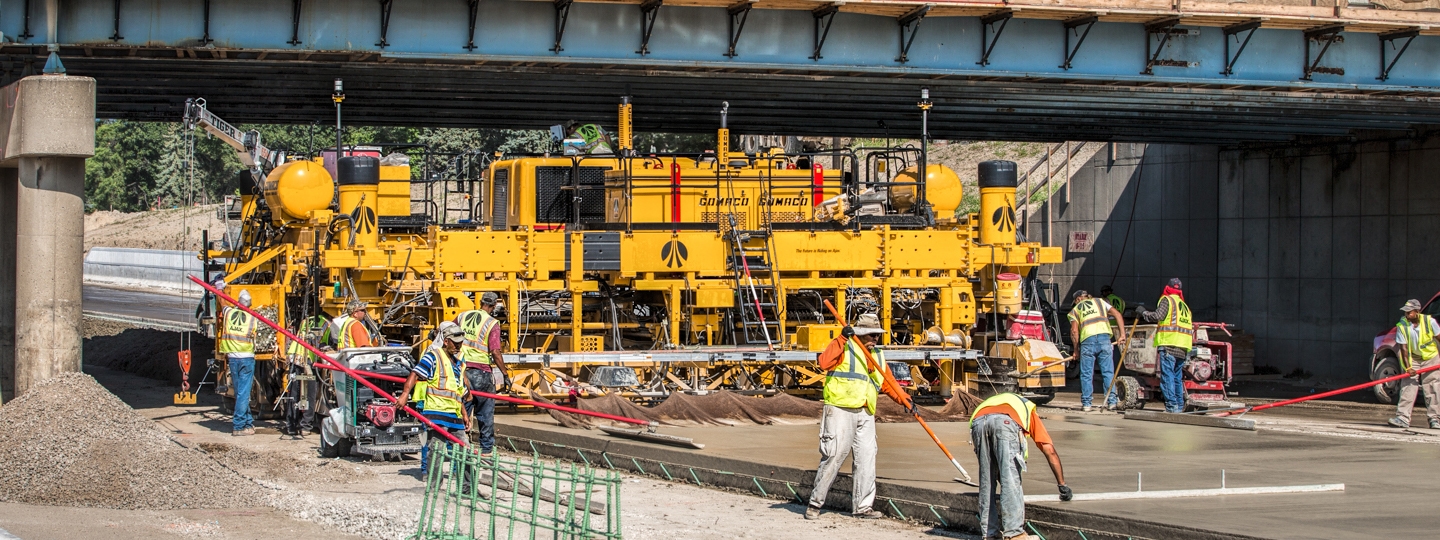
“We'd send emails and we'd call, we'd spend about three hours a day just trying to communicate. And now we can just do it all through Gearflow.”
That’s how Dave Reed, a Parts Inventory Specialist at Ajax Paving, described the change.
Before Gearflow, ordering parts meant emails, phone calls, vendor follow-ups and waiting for quotes to arrive.
Today, Ajax has sent more than 27,000 messages through Gearflow, with 23,000 going directly to vendors.
The shift has been significant enough that Dave, now Fleet Manager, described it as:
“The best thing about Gearflow is the communication.”
But communication is only part of the story.
By moving the parts ordering process into one system, Ajax has been able to get quotes faster, order directly from the field, identify parts more easily and use its purchasing data to make better inventory decisions.
Faster quotes. Faster fulfillment.
As the Ajax team began using Gearflow, they saw an immediate change in how quickly vendors responded.
Average quote times fell from 70 minutes to 25 minutes, a reduction of almost two-thirds.
That improvement carried through to fulfillment. Average fulfillment time fell from 67 hours to 25 hours. One reason is that Ajax can send a parts request to multiple vendors at once.
Today, 44% of requests are sent to two or more vendors, allowing the team to compare pricing and availability rather than waiting on a single supplier and locking in saving.
As Dave puts it:
“That’s the great thing about it.”
Half the requests start on a phone
During the rollout of Gearflow, the Ajax team noticed a growing number of requests coming through the Parts Hub mobile app.
The numbers confirmed it with 52% of requests being submitted through the mobile app.
For mechanics, that means they don't have to stop what they're doing, find a computer or call the parts team. They can pull out their phone, submit the request and start receiving quotes while they move on to the next job.
For a team working around heavy equipment, that removes a layer of friction from the ordering process and brings parts procurement directly into the field.
Finding the right part
Ordering from the field only works if mechanics can identify the part they need.
Before Gearflow, that could be difficult for Kristian Crews, a field mechanic at Ajax Paving.
“If you don't have a part number... I've sent pictures in pointing at the part I want and dealers will still [mess] it up and send me the wrong [part].”
Finding the correct part number could mean going through SIS and searching for the right component before even starting the purchasing process.
As Kristian explains:
“I have to go through SIS, find the part number... and then we start going down that road of finding a part, which takes away from, for me, with how busy I am, takes away from my next job... the longer I've taken a job, the farther it pushes my schedule out into the next day.”
With Gearflow, mechanics can find part numbers for common items directly from the app.
“I think it's pretty cool... because you can get a part number for a lot of common stuff now right out of [the app].”
That makes the ordering process easier for the mechanic while also creating a more structured record for Ajax.
Every order is tied to a specific part, giving the team visibility into what is being ordered, who is ordering it and how often.
That data became important for Ajax's next goal: understanding what parts it should keep on the shelf.
Turning ordering data into inventory decisions
Ajax didn't just want to make ordering easier. It wanted to understand what it was ordering and what it needed to keep on the shelf.
With Gearflow, the team could analyze its purchasing data and identify which parts were driving the most demand. They found that fewer than 4% of part numbers accounted for roughly a third of order volume.
That included approximately 150 part numbers ordered 10 or more times, while 374 part numbers were ordered five or more times, accounting for 48% of total order volume.
Filters were another clear pattern.
The term “OIL FILTER” appeared 802 times in requests, with filters accounting for almost 30% of request lines.
Instead of treating every request as an individual transaction, Ajax could now see the recurring demand behind those orders. That creates an opportunity to move from reactive purchasing to proactive inventory management.
If a part is being ordered repeatedly, Ajax can identify it, buy it in bulk and keep it on the shelf before a mechanic needs it.
The result is a parts operation that is not just responding to requests faster. It is learning from those requests to anticipate future demand.
From ordering parts to understanding demand
Gearflow gave Ajax a way to bring the parts ordering process into one place.
The result is a workflow where:
- Quotes come faster: average quote time fell from 70 minutes to 25 minutes.
- Orders are fulfilled sooner: average fulfillment time fell from 67 hours to 25 hours.
- Requests reach multiple vendors: 44% of requests are sent to two or more vendors.
- Mechanics can order from the field: 52% lifetime requests were submitted through the mobile app.
- Parts are easier to identify: mechanics can find part numbers for common items directly in the app.
- Inventory decisions are data-driven: Ajax can identify the parts driving the greatest volume and stock them proactively.
Ajax didn't need to change who it bought parts from.
It changed how those parts were requested, quoted, ordered and ultimately stocked.



.png)